
When it comes to the environment, it seems like no one cares anymore. People drive around - polluting for the fun of it. We waste heat and electricity like it's no big deal. Our factories run day and night, but we ignore it. When I used to take the bus, and came out of the station, the difference in the air was overwhelming from the pollution. People can’t seem to take the hints that our environment is throwing at us, and it's displayed in this cartoon.
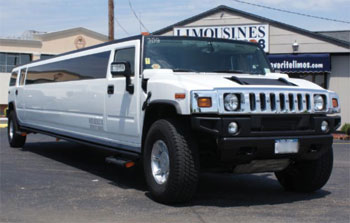
Cruising is one of the things that come to mind when I think of "polluting for the fun of it." This cartoon illustrates a hummer, an H2, towing behind it a floating vehicle that says "United Fuel in Air, (Unfair.) Ironically, it says 'unfair' which is what the human populace is to the environment. The smoke that is coming out of the vehicle is pollution the air. The theme is interesting, because usually in ads, they are "BUY OUR PRODUCT!" but here, which is not the case. It is saying "Don't buy this product!" The argument is plain and simple; H2 Hummers are driven by people who just don't care.
The 'bumper stickers' are statements displaying the ignorance/arrogance of the drivers of these vehicles. "Honk if you're high and mighty" is the first and the most generalizing of the statements and it's a great start. When people have the "Honk if..." statements, they're usually protesting something. This one, on the other hand, says "Honk if you're high and mighty," which would display your arrogance if you did. These bumper stickers are their persuasive message, and the first is the start of the sarcasm used here.
Originally, they are based on the military High Mobility Multipurpose Wheeled Vehicle, or Humvee. The Hummer is one of the larger SUV types, with commensurate high fuel consumption. (Wikipedia.com) These vehicles are used as carriers for cargo and troops as well as weapons platforms, ambulances, missile carriers, as well as many other things. After learning that, it makes one wonder how these vehicles became used for everyday driving. Even Humvees use a ton of gas, and pollute a lot, so when you read the second bumper sticker, it makes you think. "Fe fi fo fum, I smell the oil of a hybrid scum," is kind of a bitter statement, because while it insists that hybrid cars are scum, and not as good as the H2 Hummer.
Both the wording and the imagery are equally important in this cartoon, because without one, the other wouldn't make that much sense. Without the text, it would just be a picture of an H2 Hummer dragging around another vehicle that says "Unfair" on it. Yet wi
 thout that, the bumper stickers wouldn't be nearly as appealing, because a person would just glance at it, without thinking. First, the eye sees the picture, and then reads the captions, even if that is backward from the way we read; the image grabs the eye first.
Next, moving along to appeals, this ad can be seen as to appeal to all, (logos, ethos and pathos.) The appeal to logos is the rationality behind this argument, which it’s just in people’s rationality they should not driver hummers because it’s pushing along the killing of our air. There’s not really any statistics, or even facts present in this cartoon, but the statements are exaggerated truths. Logical fallacies aren’t here either, which is good, which are more common in political arguments. In a way, this is a logical appeal because it is a logical result in using such a fuel consuming vehicle.
Ethos is also strongly present in this, because it’s appeal to character, more specifically, the speakers. The speaker is the comic writer and their character is the same of the people that look for these kinds of comics, and find them funny. By reading this, you can tell that the artist/writer is someone who more than likely doesn’t drive an H2 Hummer themselves. There are no misuses of Ethos here, which makes it even more convincing. Pathos is also easy to find in this work, because it appeals to the emotions. The whole thing is full of humor, and if you find it funny it appealing to you, and the artist did their job, by making you laugh at something that you dislike. The humor in this is something that seems like it would only be seen by people who don’t agree that vehicles like this one need to be driven on our streets. These jokes are what make it an appeal to the emotion. There are no exaggerated uses of pathos here, because there is no scare tactic, over sentimentalization, or “sliding down the slippery slope fallacies” here, because this ad is simple, it says that if you support and drive H2 Hummers , you are killing the air.
Hummers have a reputation, as stated “Although the Hummer H1 has a rock-solid reputation as a go-anywhere, climb a wall, he-man machine, its historic roots run back a century to a spindly horseless carriage called the overland runabout.” (Lamm, 11) Although this is about the H1, the H2 isn’t that different. This chapter later delves into the history of the Hummer, which in fact, the vehicle later known as the Humvee, is based off a military jeep. On caption below a picture of a jeep says “The great grandfather of all Hummers is the famous Willys World War II Jeep, which was known throughout the world for its go-anywhere, four-wheel drive versatility and ruggedness.” (12) And then the next picture states; “AM General civilianized the military Humvee and created the H1, keeping the big machine’s unique proportions and making little compromise for street life.” (13)
This book does not have an argument like the comic, because it is a pretty factual book, but it makes a person wonder “WHY” have military vehicles for your personal driving?
This comic is trying to tell people that their environment is precious, and they’re destroying it by doing things like driving around in vehicles like Hummers, which treat the world unfairly.
Works cited:
Lamm, John and De Lorenzo, Matt. Hummer H2. St. Paul MN; Motorbooks International, 2002.
